
Unlisted China / Shanghai / Guides
How to Eat Xiaolongbao Without Burning the Roof of Your Mouth
The first dumpling usually teaches the lesson the hard way. Put it on a spoon first, open it on purpose, and don't let the broth win.
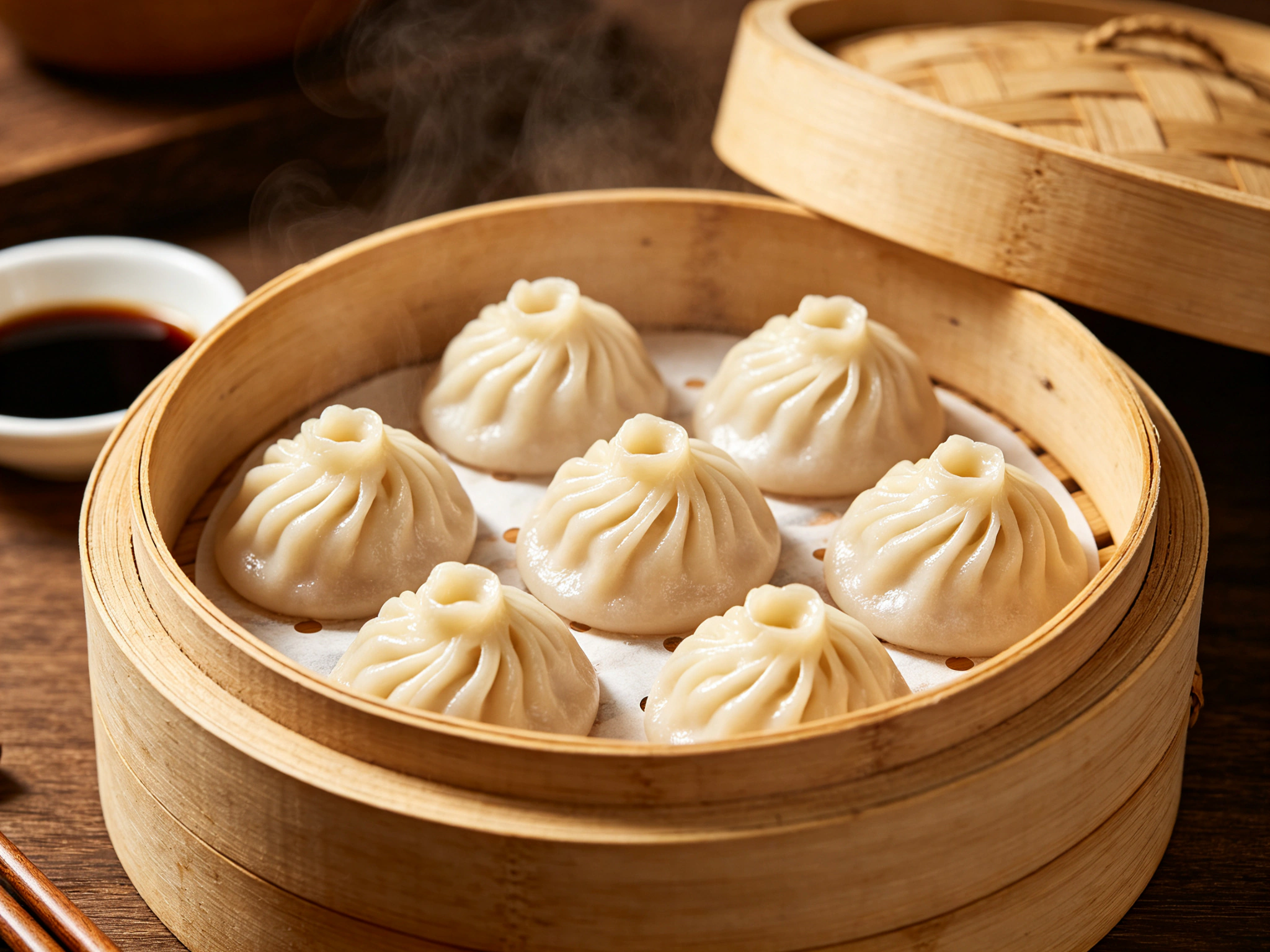
The basket arrives with the lid still half open and a cloud of steam coming off it. Everyone at the table leans in. Then someone picks up a dumpling by the belly, it tears, and the soup runs down their chopsticks.
That is the whole problem with xiaolongbao. The skin is doing two jobs at once: holding hot soup and looking delicate enough that you want to pick it up immediately.
Start with the spoon, not your mouth
Pinch the little topknot with your chopsticks. That pleated twist is the strongest part of the dumpling. Lift slowly and put it on a Chinese soup spoon.
Do not squeeze the round part. Do not stab it. If it is stuck to the paper liner, slide the chopsticks underneath rather than pulling upward.
Now you have a decision. There are two common ways to eat it, and people in Shanghai do not agree on which one is correct.
Method one: nibble, sip, then eat
This is the safest method and the one I would use for a first basket.
Bite a small opening near the side or top. Not halfway through the dumpling — just enough to let the steam out. Wait a second. Tip the spoon slightly and sip the broth.
Then eat the rest with a little black vinegar and shredded ginger.
The waiting second feels unnecessary until the first time you skip it. The outside of a xiaolongbao can be cool enough to touch while the soup inside is still hot enough to hurt.
Method two: vinegar in the hole
Plenty of people bite the tip, pour a little black vinegar into the opening and wait for the broth to cool slightly before eating the whole thing.
A common dipping ratio is roughly two or three parts black vinegar to one part soy sauce, with a small spoon of chilli oil if you want it. At the table, though, nobody is measuring. Start with vinegar, add soy a few drops at a time, and taste before making a full ramekin of it.
This method is more sour and more assertive. It is not mandatory. If the broth is good, sipping it before the vinegar is worth trying at least once.
The mistakes that actually happen
The first is lifting by the belly. The second is biting straight through the middle. The third is trying to fish a torn dumpling out of the steamer after the soup has already escaped.
There is also the chopstick-versus-fork argument. A fork works if you are careful, but it makes holes. Chopsticks plus a spoon are easier once you stop treating the dumpling like a piece of meat.
And do not order five baskets because everyone at the table wants “one each.” A basket usually holds six to ten dumplings. Xiaolongbao are rich. For two people, one basket each is a sensible start; add another after you finish.
What to order first
Start with 鲜肉小笼, pork xiaolongbao. It is the baseline. If the pork version is bland, the crab version will not save the meal.
Then decide whether you want crab. 蟹粉鲜肉小笼 is crab roe and pork. It costs more, and the difference is real: sweeter, richer, and occasionally much more expensive than visitors expect.
At Lai Lai, recent visitor reports put the pure crab set at over ¥100 for four pieces, while the crab-and-pork basket is the more sensible first order. The shop also charges ¥1 for ginger vinegar, which is not the norm at every dumpling shop. Ordering happens at the counter before you sit, and adding dishes later is not always allowed. The queue can take around half an hour at peak; the tables are small, so a group may be split up.
That does not make it a bad shop. It makes it a shop you should enter with your order ready.
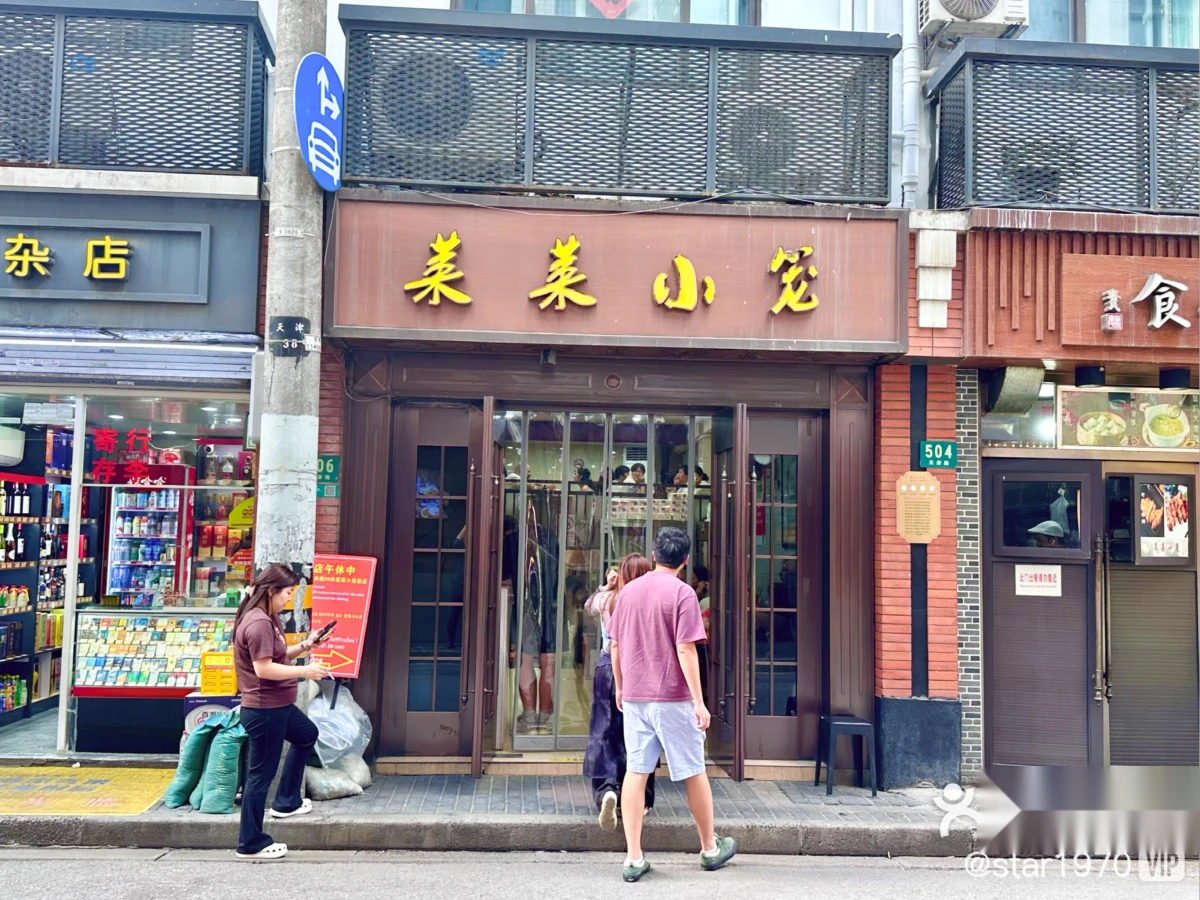
The move: order 蟹粉鲜肉小笼 (crab-and-pork xiaolongbao), eat the first one plain — no vinegar — then dip the rest in the ginger vinegar that arrives with the basket. Roughly 40% of the people queueing with you will be foreign tourists; this is the rare local institution that has quietly become an international one.
Jia Jia Tang Bao is the smaller, plainer alternative near People's Square. The room is tiny, English is limited, and the picture menu does the work. A pork basket is usually around ¥28, with crab costing more. If you are hungry, tired, and not interested in a performance, this is the easier first stop.
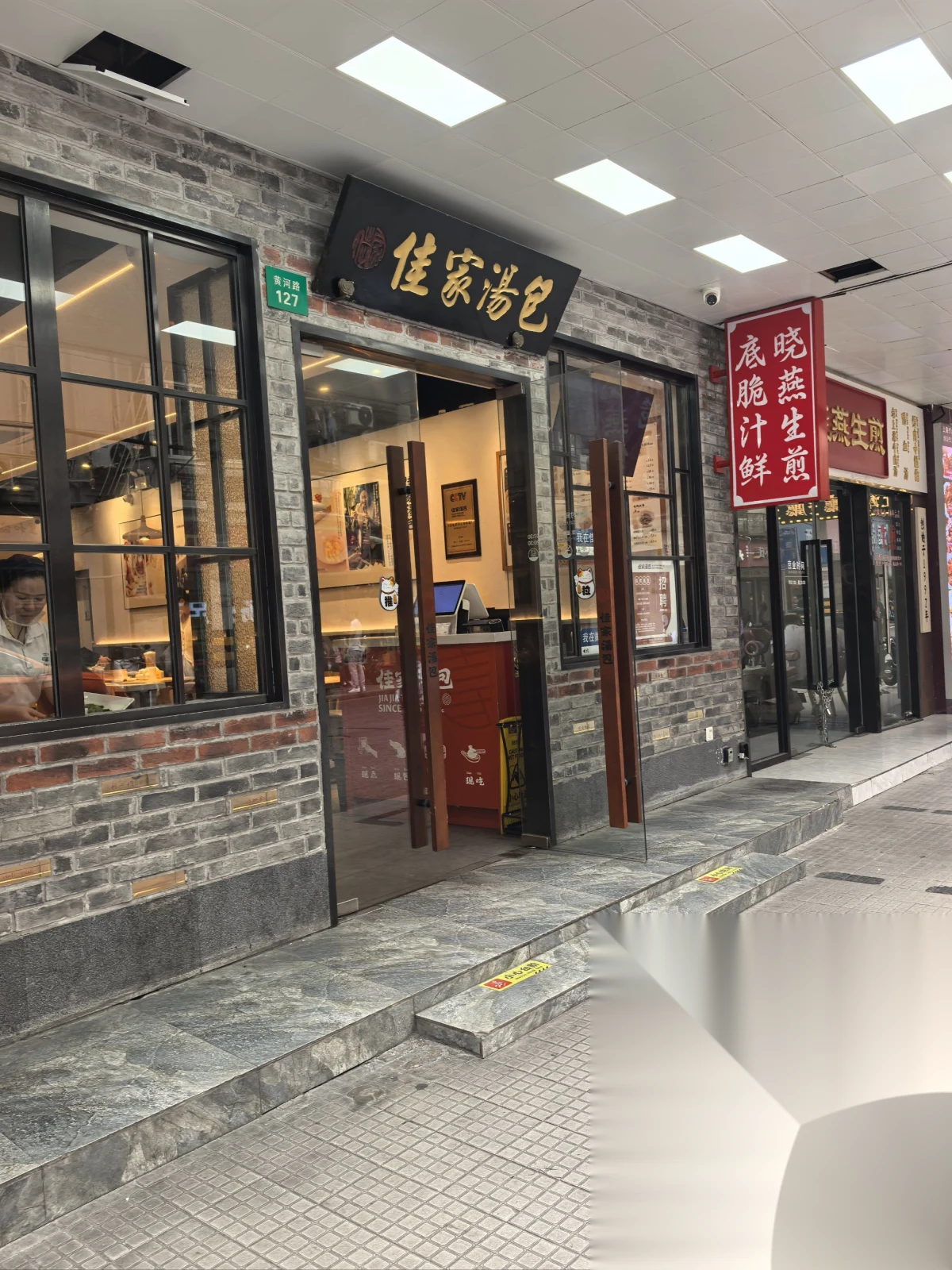
Every English-language Shanghai guide says the same three things about this shop — "cash only", "line starts at 10AM", "¥25 for 12 dumplings" — because they're all true and all still true. Order the 蟹粉鲜肉 (crab-pork) basket, add a small 小馄饨 (wonton soup). The skin is thinner and the soup more violent than at the tourist-flagship dumpling houses.
At Nanxiang in Yu Garden, the important decision is not pork versus crab. It is downstairs versus upstairs. The ground-floor takeaway counter is the cheaper, faster operation. The upstairs restaurant is a sit-down meal with a much larger bill. Both may be full of tourists, but only one is the casual dumpling stop people queue for.

Two dining areas share the building: the ground-floor takeaway counter (cheap, standing, locals queue here) and the upstairs restaurant (3-5x pricier, service charge, mostly tourists). On a budget or want the authentic one? Stay downstairs.
What the words on the menu mean
You can get through the whole meal by pointing, but a few characters help:
- 小笼包 — xiaolongbao.
- 鲜肉小笼 — pork xiaolongbao.
- 蟹粉鲜肉小笼 — crab roe and pork xiaolongbao.
- 一笼 — one steamer basket.
- 醋 — vinegar.
- 姜丝 — shredded ginger.
If you want one basket, show 一笼. If you are not sure whether the filling contains crab, point and ask 蟹粉? The answer may be 是 (yes) or 不是 (no).
A useful test after the first bite
Good xiaolongbao do not need much. The skin should hold together without feeling rubbery. The pork should taste like pork, not a mouthful of salt. The broth should be savoury and slightly sweet, not oily enough to coat your whole mouth.
If everything tastes better only after a lot of vinegar, that is usually a sign to order something else next time.
The first dumpling is the awkward one. By the third, you will have your own method. Just do not let the second basket go cold while you argue about whether the vinegar goes inside or outside.
More from Shanghai
 Food
What a Meal Actually Costs in Shanghai
A breakfast can cost less than a coffee. A famous basket of dumplings can cost as much as dinner. The difference is usually not the food ...
Read → Food
11 Dishes You Can't Leave Shanghai Without Trying — A Local's Bucket List
Ask most visitors what Shanghai tastes like and they'll say: soup dumplings. Fair enough, they're great. But anyone who grew up here will...
Read → Food
Fifteen Minutes From The Bund, The Food Changes Completely
The Bund's own restaurants speak fluent English and take every card. Walk fifteen minutes inland and you're in a different Shanghai: olde...
Read → Food
Liang, Long, Zhi — How Shanghai Actually Sells Its Food
Nothing at an old-school Shanghai shop is sold by "a portion". Noodles come in liang, buns come in liang, dumplings come in long, pancake...
Read → Food
How To Order Noodles In Shanghai Like You Live Here
Hard noodles or soft. Soup on the side or in the bowl. Scallions held back or doubled. The words that change what arrives at your table —...
Read → Food
The 10 Tables Every First-Time Visitor Should Eat At In Shanghai
Not the ten fanciest, not the ten most famous — the ten places where the food is genuinely good, the price is genuinely small, and the ex...
Read → Food
Eating At Yu Garden Without Getting Trapped
Yu Garden Bazaar is where the invention of the soup dumpling is genuinely worth seeing — and where the worst meal of your trip is genuine...
Read → How-to
How to Order Food in China With No English
You don't need to speak Chinese. You need to copy, paste and point. The exact five moves that get food in front of you — plus the sentenc...
Read → Food
The Two Schools of Shanghai's Pan-Fried Bun
One bursts with scalding soup. One has almost none. Locals have been arguing about which is correct for a century — and most visitors onl...
Read → Food
Where Shanghai Eats Breakfast
Four breakfasts, four street windows you would walk straight past. What locals eat before nine, what it costs, and the Chinese words that...
Read →